
Everyday Problems of a Project Manager with Status Reports
- Jan Bartkowiak
- Process
- April 4, 2022
- 4 min. read
Table of Contents
Everyday Problems of a Project Manager with Status Reports
The Status Report: A Time-Consuming Tightrope Walk
Imagine you are a project manager and you have to regularly document the progress of your project. Reality is often a frantic mix of constant updates, juggling information, and an eternal race against the clock. Status reports require a lot of time and precision.
Instead of working with your team all day or developing new strategies, you spend hours gathering data, writing reports, and reviewing them. A constant back and forth of information can lead to misunderstandings and poor decisions if reports are incomplete or inaccurate.
And then there’s the communication problem. Status reports often need to be communicated to various stakeholders, and if this communication isn’t clear and structured, it can lead to significant confusion.
The Perfect Status Report: What Belongs in It?
What actually makes a status report “perfect”? There are several essential components (cf. PMI) that a status report should include to make your life easier:
- Summary: A brief overview of the project and current status.
- Milestones and Progress: Information on achieved milestones and progress compared to the schedule.
- Tasks and Activities: Overview of completed, ongoing, and upcoming tasks.
- Risks and Issues: Identification of current risks and issues, as well as mitigation measures.
- Changes: Details on changes to the project scope or plan and their impacts.
- Next Steps: Planned activities and goals for the next reporting period.
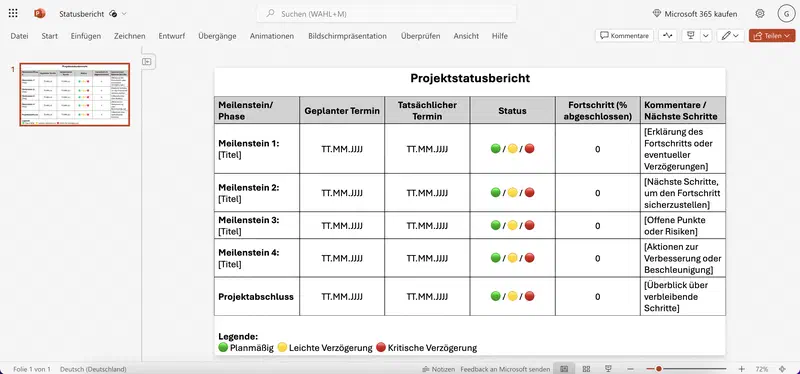
First and foremost, you need a clear project overview. A brief overview of the project, including goals, scope, and key milestones, helps keep everyone involved on the same page (especially new colleagues!).
Project progress (Link) is naturally the heart of any status report. It should contain detailed information about the current state of activities, achieved milestones, and completed tasks. An updated schedule shows whether the project is on time or if there are delays, while the budget overview helps keep track of finances.
Additionally, status reports should show the current state of resources and identify potential risks and issues. Changes during the project must be documented, including the reasons and impacts on the project. Finally, the next steps and specific requirements or support that you or your team need are of great importance.
The Everyday Consequences: Stress, Lack of Time, and Poor Decisions
The pressure to please everyone while simultaneously delivering all details correctly and promptly is a constant companion. The demands and expectations can be overwhelming, especially when the course of the project is constantly changing. Delivering up-to-date and accurate reports can therefore cause significant stress. This not only affects your work quality but also your general well-being. Interesting information on this is provided by e.g. the RKI.
The time you spend creating and reviewing status reports is taken away from other important tasks. This can lead to delays in various project areas or the neglect of other essential tasks. If you are too deeply engrossed in administrative tasks, less time remains for direct leadership and motivation of your team, potential customers, and stakeholder management.
Poor decisions can also be a consequence of inadequate or inaccurate status reports. If the information on which decisions are based is incorrect, this can jeopardize project goals, reduce the motivation of project staff, and cause additional problems or costs. Poor decisions also occur when the status is not clearly and effectively communicated to stakeholders. This can impact trust in you and the project as a whole.
Overall, these challenges show how important it is to create and manage status reports effectively. For you as a project manager, it is crucial to find a balance between administrative tasks and leading the project to ensure both efficiency and your well-being. And while the status report may seem like an unloved chore, a well-structured approach can ultimately make the difference between success and failure.
A Solution: Automate!
We will introduce a possible solution to you in a bit more detail in the next blog article. As long as you work with Microsoft tools like Teams, Excel, and PowerPoint, are somewhat technically savvy yourself (or have a good developer on hand), we can free up your time!
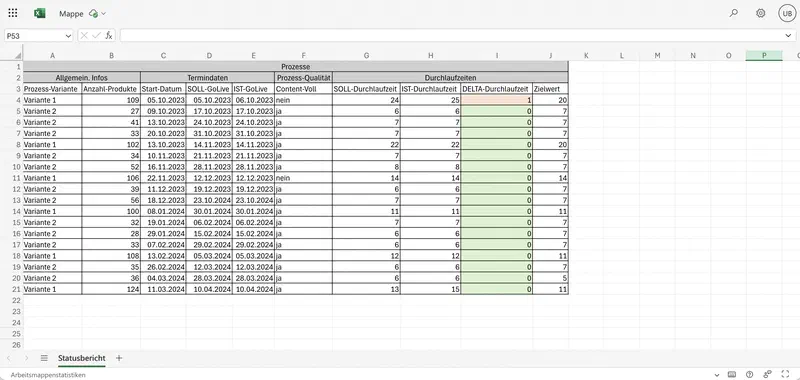
Data Basis
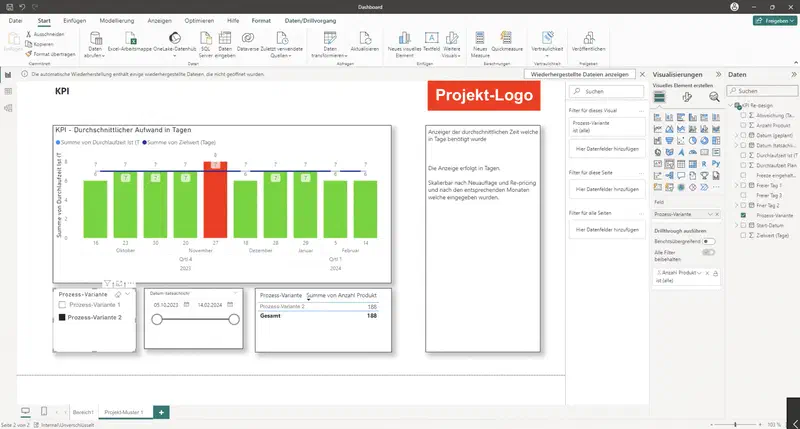
With the Microsoft platform, your reporting becomes a breeze. You can automate data collection, visualize your key metrics in real-time, turn complex data into clear, understandable reports, and focus entirely on the essentials. Let technology work for you and set new standards in efficiency and accuracy!
Images and other credits!
- Cover image: Photo by Resume Genius on Unsplash